Source floor length v neck sequin dress for Prom, Wedding, and Party
Explore 30 options for a floor length v neck sequin dress suitable for evening events. Buyers can compare styles, materials, and customization features from verified suppliers to find the perfect garment for their needs.
Key considerations
Products List


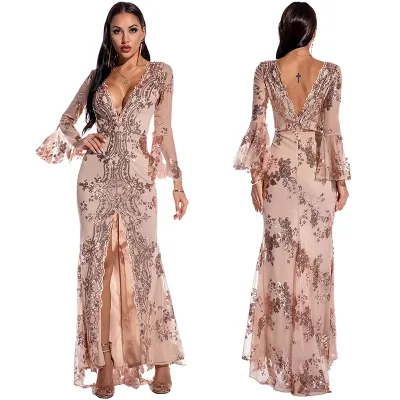


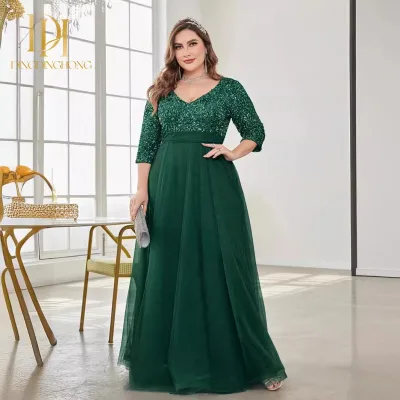
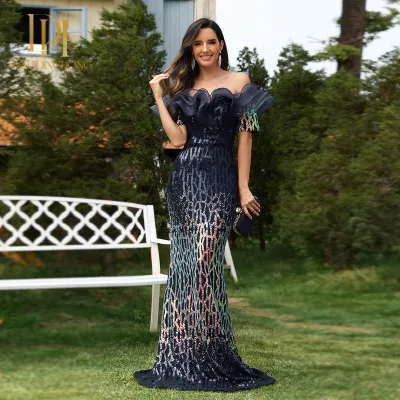
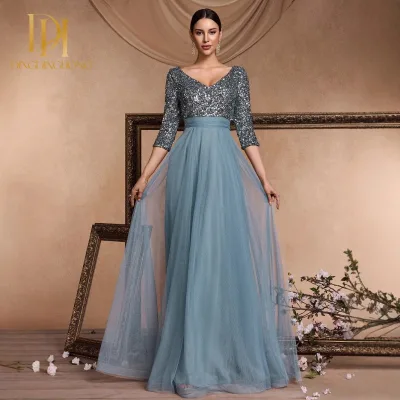
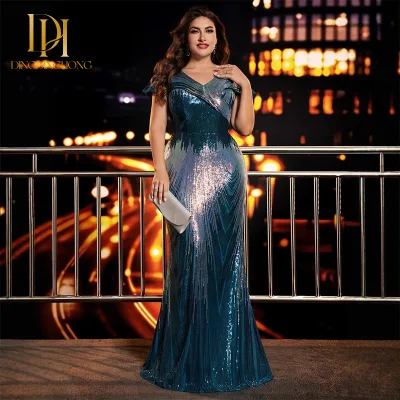
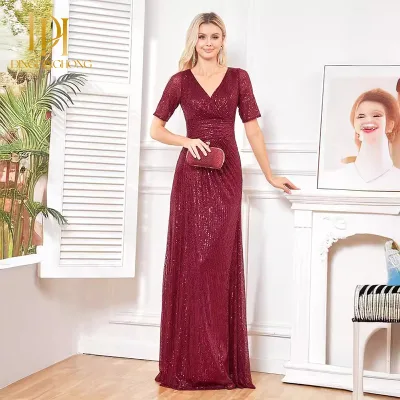
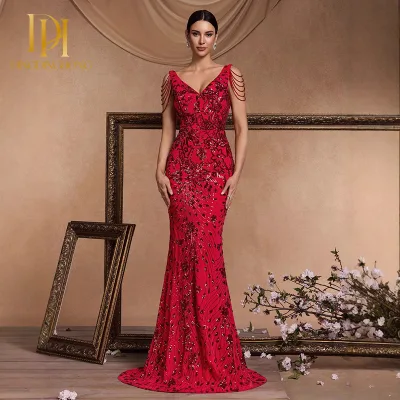


Comprehensive Sourcing Guide
Strategic Sourcing Guide for Floor Length V-Neck Sequin Dresses
The global market for formal evening wear continues to evolve, with floor-length sequin dresses remaining a dominant category for galas, proms, and high-profile social events. For B2B procurement professionals, sourcing these garments requires a nuanced understanding of material composition, construction techniques, and supply chain variables. The specific target of a floor-length, V-neck sequin dress presents unique challenges regarding fabric weight, embellishment durability, and silhouette maintenance. This guide synthesizes available product attributes and industry standards to provide a disciplined framework for evaluating potential suppliers and ensuring product quality without relying on unverified claims or speculative data.
Technical Specifications and Material Composition
When evaluating a floor-length sequin dress, the primary technical focus must be on the interplay between the base fabric and the embellishment layer. The observed product data indicates a diverse range of materials used in this category, including 100% polyester, chiffon, and embroidered organza. For a V-neck design, the structural integrity of the neckline is paramount. A V-neck cut places significant stress on the fabric; therefore, the lining material is critical. Data suggests that "Polyester Imitation Cotton" is a common lining choice, offering a balance of comfort and structure. However, buyers must verify that the lining is sufficiently robust to prevent the sequins from snagging or the fabric from tearing at the neckline during movement.
The sequin application itself is a defining technical feature. The observed attributes list "Hand Sewing" as a primary technology, which often correlates with higher perceived value and durability compared to machine-applied sequins. Hand-sewn sequins are less likely to shed during wear, a critical factor for floor-length gowns where the hemline is frequently dragged or stepped on. The decoration is explicitly noted as "sequnis" (sequins) in various listings, often paired with "Embroidered Organza" or "Chiffon" as the base fabric. The choice of fabric type dictates the drape of the dress. While "Chiffon" offers a flowing, ethereal look suitable for a ball gown silhouette, "Embroidered Organza" provides more stiffness and volume. Procurement teams must ensure the supplier's technical sheet explicitly matches the requested fabric weight to the desired silhouette, as a heavy sequin application on lightweight chiffon can cause the dress to lose its shape.
Furthermore, the sleeve configuration varies significantly in the market. While some observed models feature "Full" sleeve lengths, others are "Sleeveless" or feature "Regular" sleeve styles. For a V-neck floor-length dress, the sleeve choice impacts the overall aesthetic and comfort. A sleeveless design emphasizes the shoulder and neckline, requiring precise tailoring to ensure the V-neck does not gape. Conversely, full sleeves may require additional fabric for the sequin application, increasing the total weight and potentially affecting the "Breathable" attribute, which is listed as a key feature for some models. Buyers should request detailed garment construction diagrams to understand how the sequins are anchored to the base fabric, particularly in high-stress areas like the V-neck and the hemline.
Design Attributes and Silhouette Variations
The design landscape for floor-length sequin dresses is characterized by a wide array of silhouettes and style descriptors. The observed data highlights "Ball Gown" and "Straight" as common silhouettes. A Ball Gown style typically features a fitted bodice and a voluminous skirt, which requires a substantial amount of sequin fabric and a sturdy internal structure to maintain the shape. In contrast, a "Straight" silhouette offers a more streamlined look, which may be preferable for a modern, sleek V-neck design. The "Style" attribute also varies, ranging from "Vintage" and "Sexy" to "Casual" and "Party." For a floor-length V-neck dress intended for formal occasions, the "Party" and "Sexy" descriptors are most relevant, though the "Vintage" style may imply specific cutouts or back designs that need to be verified against the V-neck requirement.
The neckline is a critical design element that defines the dress's character. While the core keyword specifies a "V-neck," the observed data includes "stand" collars and "Round Collar" options. This discrepancy underscores the necessity of precise communication with suppliers. A "stand" collar is incompatible with a deep V-neck, whereas a "Round Collar" offers a different aesthetic entirely. Buyers must explicitly confirm that the V-neck depth and angle align with their design brief, as a shallow V-neck may not achieve the intended look. Additionally, the "Pattern" attribute, which includes "flower" and "Letters," suggests that some sequin dresses feature printed or embroidered motifs beneath the sequins. For a classic floor-length V-neck dress, a solid sequin pattern is often preferred to maintain elegance, but custom designs may incorporate floral embroidery as a base layer.
The length specification is another vital design parameter. The data explicitly mentions "Floor-Length" and "Dresses-Length: Floor-Length," confirming that this is a standard category. However, other models are listed as "Knee-Length" or "Medium" length. It is essential to distinguish between these categories during the sourcing process to avoid receiving incorrect samples. The "Long" attribute is also noted, which may refer to the sleeve length or the overall dress length. To ensure accuracy, buyers should request physical samples that match the exact "Floor-Length" specification, measuring from the shoulder to the hem to confirm the garment meets the intended proportion.
Cost Drivers and Pricing Dynamics
Understanding the cost structure of floor-length sequin dresses is essential for effective budget management. The observed price range in the market spans from $0.50 to $68.00 USD, a significant variance that reflects differences in material quality, construction complexity, and order volume. The lower end of the spectrum likely corresponds to machine-applied sequins on standard polyester fabrics with minimal customization. In contrast, the higher price points are associated with hand-sewn sequins, premium fabrics like embroidered organza, and complex designs featuring custom patterns or unique silhouettes.
The "MOQ" (Minimum Order Quantity) is a major cost driver. The observed MOQ range is between 2 and 500 units, with some specific listings indicating an MOQ of 10,000 units. High MOQs, such as the 10,000-unit threshold, are typical for suppliers offering extensive customization or OEM services. For buyers with smaller order volumes, the per-unit cost will be higher due to the fixed costs of setup and labor. Conversely, suppliers with lower MOQs may charge a premium for smaller batches or may not offer the same level of customization. The "Customization" attribute is listed as "Available" across many models, which implies that bespoke designs will incur additional costs. Buyers should factor in the cost of design changes, pattern development, and sample revisions when calculating the total landed cost.
Labor intensity is another significant factor influencing price. The "Hand Sewing" technology noted in the product data suggests a labor-intensive production process. Hand-sewn sequins require skilled artisans to attach each sequin individually, which increases production time and cost compared to automated methods. This labor cost is often passed on to the buyer in the form of a higher unit price. Additionally, the "OEM" (Original Equipment Manufacturer) capability allows for private labeling and custom branding, which adds value but also increases the overall cost. Buyers must balance their budget constraints with the desired level of quality and customization, ensuring that the selected supplier can deliver the required specifications within the financial framework.
Supplier Evaluation and Compliance Verification
Evaluating suppliers for floor-length sequin dresses requires a rigorous approach to compliance and quality assurance. The observed data indicates that the "prod_origin" is "China," which is a common manufacturing hub for this category. However, origin alone does not guarantee quality or compliance. Buyers must verify that the supplier adheres to international safety and quality standards, particularly regarding the materials used. The "prod_standard" is listed as "A piece" or "customized," which suggests that suppliers may have varying internal quality control protocols. Buyers should request evidence of compliance with relevant textile safety standards, such as restrictions on harmful substances in fabrics and sequins.
Certification status is a critical area that requires careful verification. The provided data does not explicitly list specific certifications (e.g., OEKO-TEX, GRS), so buyers must not assume compliance based on product descriptions. Instead, procurement teams should request valid certification documents from potential suppliers. This includes verifying that the "Polyester" and "Cotton" materials used are sourced responsibly and that the "Hand Sewing" process meets labor standards. The "Customized" and "OEM" attributes indicate that suppliers are willing to adapt to buyer requirements, but this flexibility must be balanced with strict adherence to safety and ethical standards.
Supplier reliability is another key evaluation criterion. The "prod_packing" methods vary, with options including "Custom," "Each Packed in a Polybag," and "OPP Bag." Proper packaging is essential to prevent damage to the sequins during transit. Buyers should assess the supplier's packaging protocols to ensure that the dresses are protected from crushing, snagging, and moisture. Additionally, the "Lead Time" is not explicitly provided in the data, but it is a critical factor for planning. Buyers should inquire about production timelines, especially for custom orders, to ensure that the delivery schedule aligns with event dates or inventory needs.
Quality Control and Inspection Protocols
Implementing a robust quality control (QC) strategy is essential for mitigating risks associated with floor-length sequin dresses. The "Technics" attribute, which includes "Embroidered" and "Hand Sewing," highlights the complexity of the production process. QC inspections should focus on the durability of the sequin attachment, the integrity of the stitching, and the consistency of the fabric. A common issue with sequin dresses is sequin shedding, which can be minimized by verifying the hand-sewing technique used by the supplier. Inspectors should randomly select samples and perform pull tests to ensure that sequins are securely attached.
The "Feature" attribute, such as "Breathable," should be verified through physical testing. While the data lists this as a characteristic, it is not a guarantee for every product. Buyers should request fabric breathability test results or conduct their own assessments to ensure the dress is comfortable for extended wear. The "Lining Material," identified as "Polyester Imitation Cotton," should be checked for softness and durability. A poor-quality lining can lead to discomfort and reduce the overall perceived value of the dress. Additionally, the "Print" and "Pattern" attributes, including "flower" and "Letters," should be inspected for color fastness and alignment. Misaligned patterns or faded colors can significantly detract from the dress's aesthetic appeal.
For floor-length gowns, the hemline and overall length are critical quality metrics. Inspectors should measure the dress from the shoulder to the hem to confirm it meets the "Floor-Length" specification. Any deviation in length can affect the fit and appearance of the dress. The "Silhouette" should also be checked to ensure it matches the design brief, whether it is a "Ball Gown" or "Straight" cut. Any distortions in the shape or uneven hemlines should be rejected. Finally, the "Packaging" should be inspected to ensure that the dresses are protected and presented professionally, as this reflects on the brand's image.
Long-Term Procurement and Relationship Management
Building a sustainable procurement strategy for floor-length sequin dresses involves more than just securing a single order. It requires establishing long-term relationships with suppliers who can consistently deliver high-quality products. The "Customization" and "OEM" capabilities of suppliers are valuable assets for buyers looking to develop unique product lines. By working closely with suppliers, buyers can refine designs, improve materials, and optimize production processes over time. This collaborative approach can lead to cost savings and enhanced product quality.
The "Age" attribute, which includes "Teenager," suggests that some products are targeted at specific demographics. Buyers should consider the target market when selecting suppliers and products. A supplier experienced in producing dresses for teenagers may have different capabilities compared to one specializing in adult formal wear. Understanding the target audience helps in aligning product features, such as style, fit, and price point, with market expectations.
Furthermore, the "Season" attribute, listed as "Summer," indicates that some sequin dresses are designed for warmer weather. This is particularly relevant for floor-length gowns, which can be heavy and warm. Buyers should verify that the fabric and lining choices are appropriate for the intended season to ensure customer satisfaction. The "Occasion" attribute, including "Party" and "Daily," also provides insight into the versatility of the product. While floor-length sequin dresses are primarily for special occasions, some designs may be suitable for daily wear, depending on the style and fabric.
In conclusion, sourcing floor-length V-neck sequin dresses requires a comprehensive understanding of technical specifications, design attributes, cost drivers, and quality control measures. By leveraging the available product data and adhering to disciplined procurement practices, buyers can navigate the complexities of this market and secure high-quality products that meet their specific needs. The key to success lies in thorough supplier evaluation, rigorous quality assurance, and the development of strategic partnerships that support long-term growth and innovation.
FAQs
Can I customize the floor length v neck sequin dress design?
Yes, customization is available for these dresses. Buyers can request specific changes to the design, fabric, or embellishments, though this may affect the minimum order quantity and unit price.
What materials are used for the lining of these dresses?
The lining material is typically Polyester Imitation Cotton. This choice balances comfort with the structural integrity needed to support the sequin embellishments and maintain the floor-length silhouette.
How are the sequins attached to the fabric?
The primary technology used is Hand Sewing. This method ensures higher durability and reduces the risk of sequins shedding compared to machine application, though it increases labor costs.
What is the minimum order quantity for custom orders?
The MOQ varies by supplier, ranging from 2 to 500 units, with some custom listings requiring 10,000 units. Buyers should verify the specific threshold before requesting a quote for their volume.
Which packaging options are available for these evening gowns?
Packaging options include Custom, Each Packed in a Polybag, or OPP Bag. Proper packaging is essential to prevent snagging and damage to the sequins during transit to the destination.
Can I find floor length v neck sequin dresses with specific sleeve styles?
Yes, styles include Full, Sleeveless, and Regular sleeves. Buyers must specify their preference as the data shows variations, and some designs may feature stand or round collars instead of a V-neck.